tags: - public-ready - export-bio
Thrips
Overview
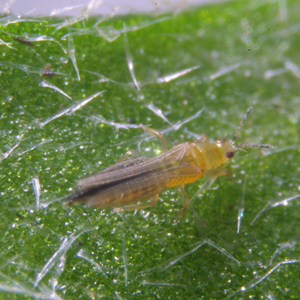
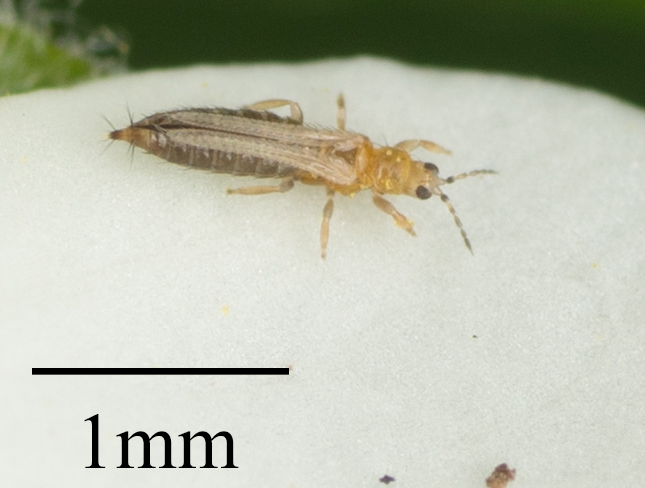
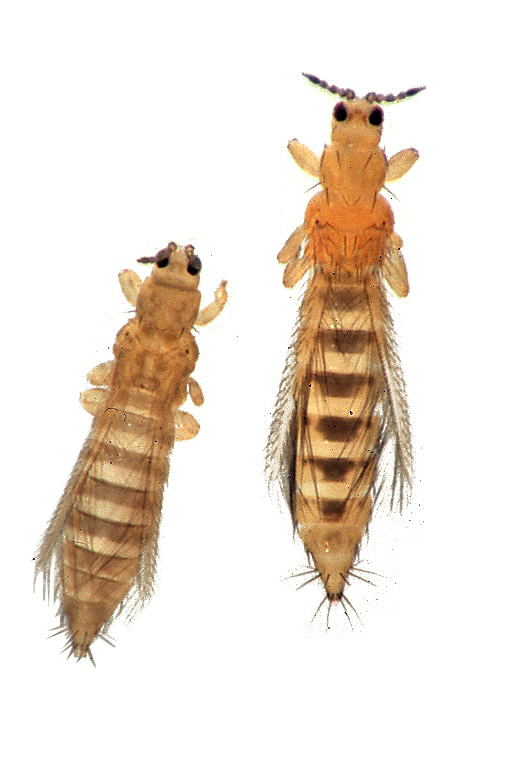
Thrips are major pests of protected crops, ornamentals, soft fruit and flowering crops. They damage leaves, flowers and fruit by rasping plant tissue and feeding on the released cell contents.
Thrips pressure often rises during bright, warm and dry periods, especially when crops are flowering and pollen is available.
Symptoms
- Silvering or scarring on leaves
- Bronzing on foliage
- Distorted young growth
- Flower damage
- Pollen disturbance
- Russeting or scarring on fruit
- Black faecal specks
- Reduced market quality
Conditions that increase risk
- Hot dry weather
- Spring flush
- Warm protected environments
- Flowering crops
- Pollen availability
- Dry canopy conditions
- Dense crop areas with poor monitoring access
Thrips can increase quickly when warm, dry conditions overlap with flowering and fresh crop growth.
Similar or associated pests
Thrips and spider mites are often linked through warm, dry conditions, while thrips and whitefly may overlap in protected crops where predatory mites are used preventatively.
Biological control options
Predatory bugs
Predatory mites
Predatory mites mainly target young thrips larvae. Orius species are important where flowering crops allow establishment and where adult thrips pressure is significant.
Orius species nuance
Orius laevigatus is usually strongest once crops are flowering and flower thrips dominate.
Orius majusculus is often useful for leaf-based thrips pressure or cooler conditions.
A practical programme often uses predatory mites as the baseline, then Orius as the flowering-stage predator layer.
Monitoring strategy
Thrips monitoring should combine plant inspection with trap trends.
Useful checks include:
- tapping flowers over white paper
- inspecting young leaves and growing points
- checking flowers for larvae and adults
- looking for black faecal specks
- checking fruit or petals for scarring
- using blue or yellow sticky traps
- recording hotspots by bay, bench or crop row
Trap catches are useful, but crop damage and flower inspections are often more important for decision-making.
Crop relevance
Thrips are especially important in:
- strawberries
- peppers
- cucumbers
- ornamentals
- bedding plants
- herbs
- cut flowers
- protected soft fruit
Flowering crops can support faster population build-up because pollen improves thrips survival and reproduction.
Environmental drivers
- Warm, dry conditions favour thrips development
- Flowering increases food availability
- Dry canopy conditions can reduce some predator performance
- Pupation in soil or growing media means substrate biology can matter
- Repeated warm days compress generation time
- Poor monitoring access allows hotspots to expand unnoticed
Thrips management is strongest when biological control, crop stage and environmental conditions are considered together.
IPM notes
- Start predatory mites preventatively
- Use Orius where flowering and pollen support establishment
- Monitor flowers as well as leaves
- Avoid disruptive sprays that remove predator populations
- Watch warm, dry weather forecasts closely
- Focus on hotspots before damage spreads
- Consider substrate-stage pressure where crops are long-term
Commercial species index
Risk Index Scoring (Thrips)
Useful risk anchors:
- Flowering crop = higher risk
- Warm dry weather = faster development
- Rising trap counts = trend signal
- Visible flower damage = action signal
- Larvae in flowers = active breeding population
- Poor predator establishment = reduced suppression
Thrips are classified in the IPM Risk Engine as:
Flowering Accelerators
Risk escalates during flowering initiation and warm stable weather.
See:
Related environment pages
- Hot dry weather
- Humidity and leaf wetness
- Temperature
- Ventilation and air movement
- Environmental driver matrix — key pests
Related tools
Practical grower guidance
For practical biological control strategies, monitoring advice and IPM implementation see:
Further guidance
Use this page alongside the practical control guide and related BioWiki links above.
Biological control & IPM foundations
For broader IPM principles, biological control strategy, monitoring philosophy and ecological management concepts see:
Common host plants
Thrips are especially important on:
- Strawberry
- Cucumber
- Sweet Pepper
- Chilli Pepper
- Aubergine
- Tomato
- Rose
- Chrysanthemum
- Basil
- Mint
- Onion
- Leek
- Garlic
See the Thrips Host Plant Hub for crop-specific symptoms and monitoring priorities.
Thrips topic guide
Use these focused pages for more detail:
- Host plants and crop-specific symptoms
- Virus transmission and vector risk
- Environment and outbreak risk
- Flower thrips versus leaf thrips
- UK commercial species index
- Practical biological control guidance