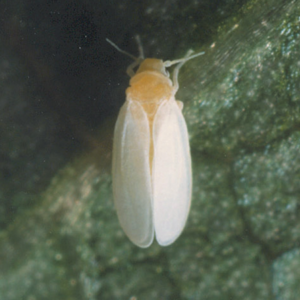
Whitefly
Overview
Whitefly are among the most important pests in protected horticulture.
They are especially problematic in: - tomatoes - cucumbers - peppers - aubergines - poinsettia - ornamentals
Whitefly feed on sap and can rapidly build large populations in warm protected crops.
Identification
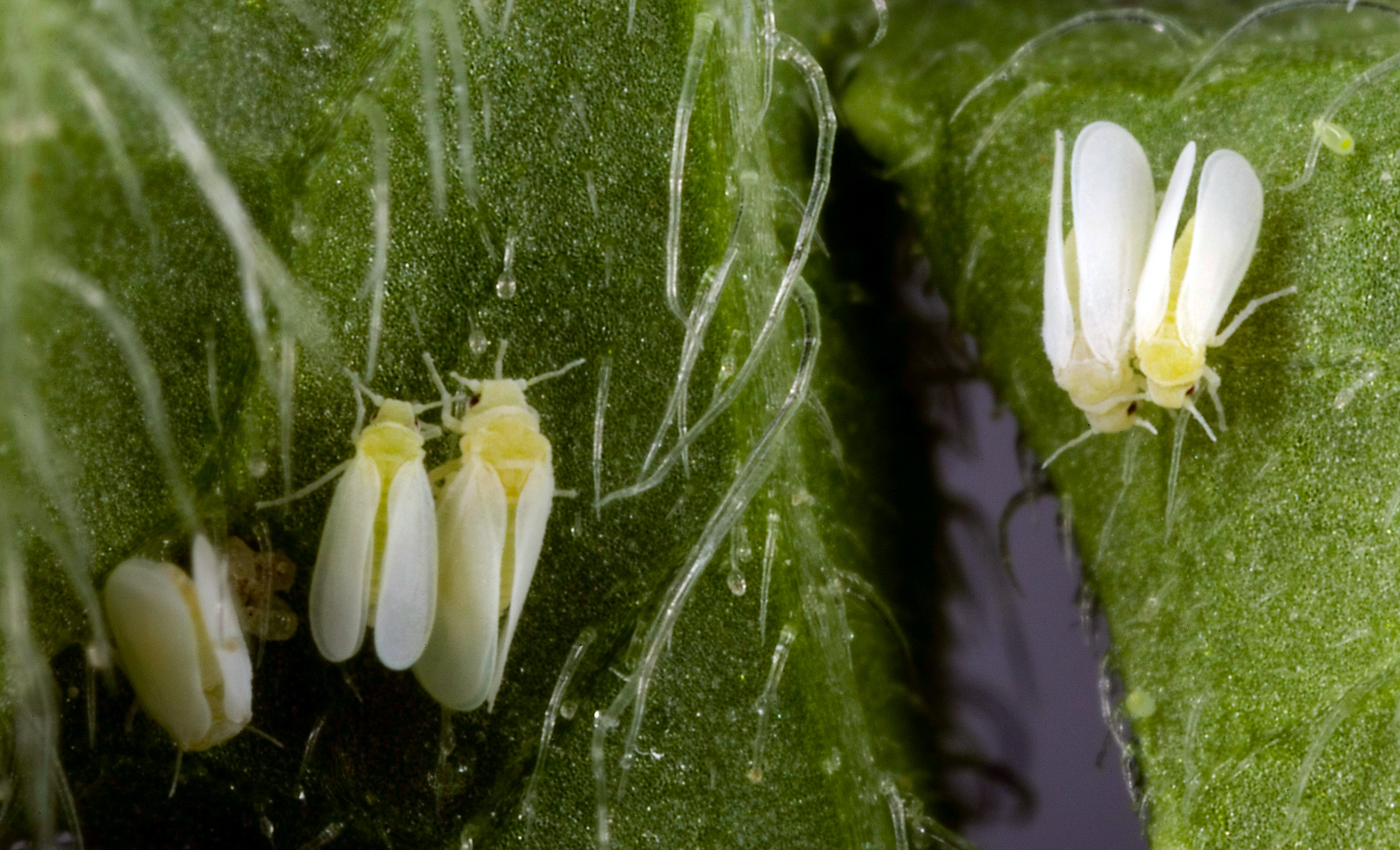
Adults are: - small white flying insects - commonly found on lower leaves - easily disturbed when plants are moved
Immature stages occur mainly on leaf undersides.
Look for: - adults flying upward - scales on leaves - honeydew - sticky foliage - sooty mould
Common whitefly species
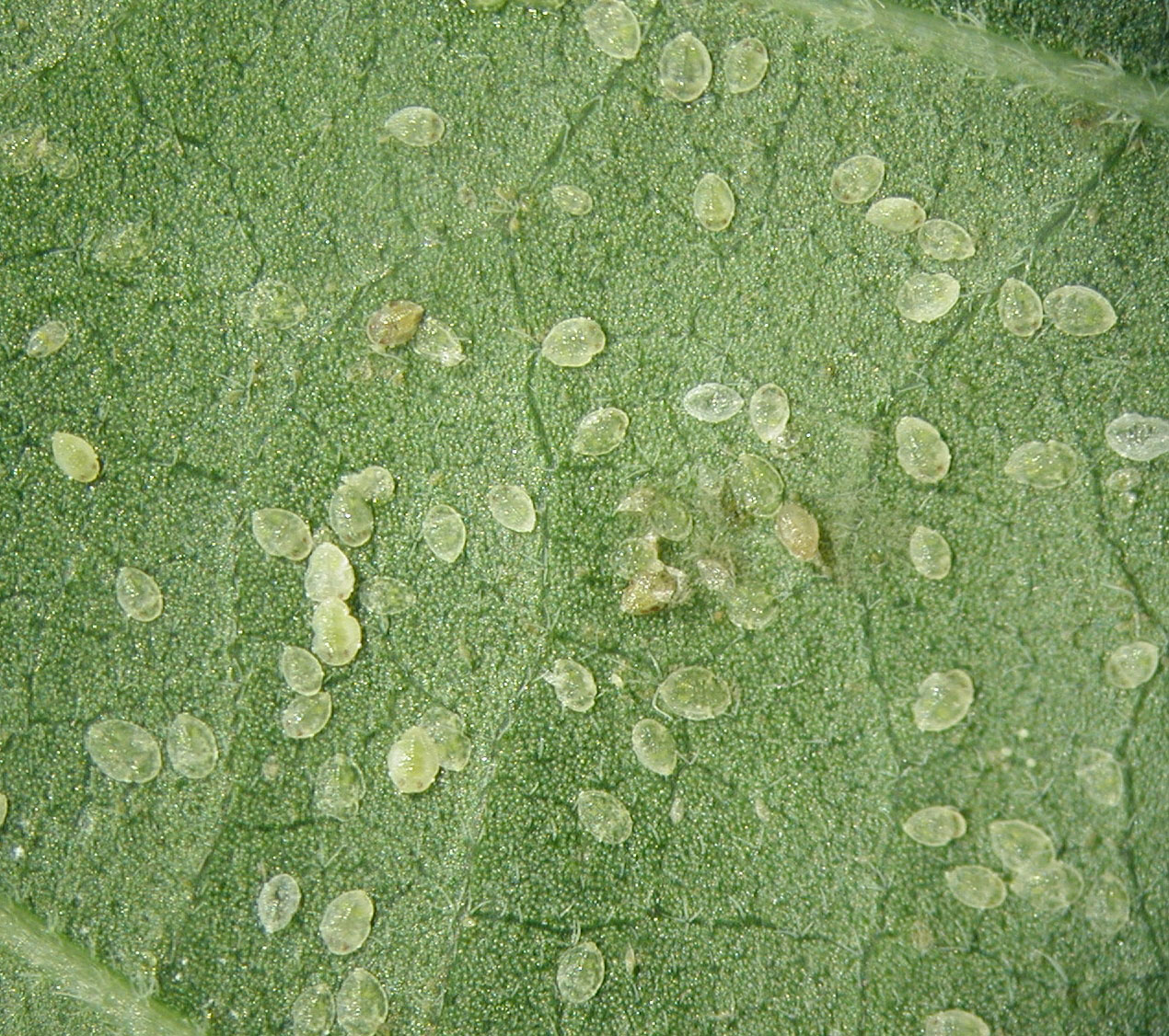
Although whiteflies all look similar at first glance, several species are important in horticulture. The three most commonly encountered are:
Glasshouse whitefly (Trialeurodes vaporariorum)
The most familiar whitefly in UK protected horticulture. Adults are bright white with a dusting of wax and usually hold their wings almost flat over the body, giving a broader, more triangular appearance. The pale yellow body is mostly hidden beneath the wings. It is commonly found on tomatoes, cucumbers, peppers, ornamentals and many glasshouse crops.
Tobacco or silverleaf whitefly (Bemisia tabaci)
An increasingly important global pest and one of the world's most important vectors of plant viruses. Adults are slightly smaller than glasshouse whitefly and usually hold their wings roof-like, leaving the yellow body clearly visible between the wings. This gives the insect a noticeably slimmer appearance.
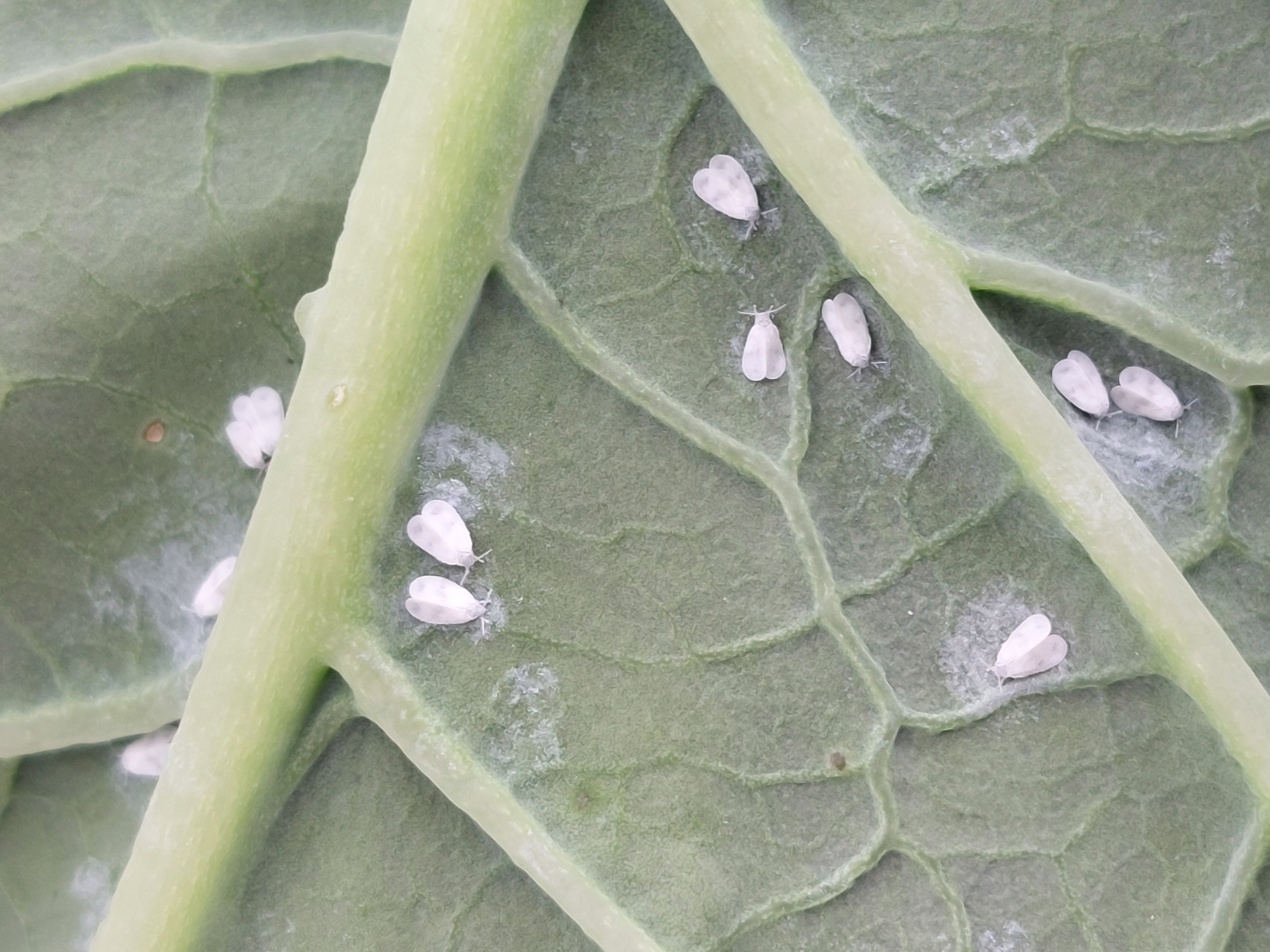
Cabbage whitefly (Aleyrodes proletella)
Primarily associated with brassicas such as kale, cabbage and Brussels sprouts. Heavy infestations can develop on the undersides of leaves, producing large amounts of wax, honeydew and sooty mould.
| Feature | Glasshouse whitefly | Tobacco whitefly |
|---|---|---|
| Scientific name | Trialeurodes vaporariorum | Bemisia tabaci |
| Adult appearance | Broader, more triangular | Smaller, slimmer |
| Wing position | Wings held almost flat over the body | Wings held roof-like, slightly open |
| Yellow body visible | Mostly hidden | Clearly visible |
| Virus transmission | Rarely important | Major virus vector |
| Common crops | Tomatoes, cucumbers, peppers, ornamentals | Vegetables, ornamentals and many protected crops |
In practice, accurate identification may require close inspection or specialist diagnosis, but the wing position and visibility of the yellow body are often enough to distinguish the two most common species in the field.
Life cycle
The whitefly life cycle includes:
- egg
- mobile crawler
- attached immature or nymphal stages
- final immature or pupal stage
- winged adult
Adults usually lay eggs on leaf undersides.
After hatching, the crawler moves a short distance before settling. Later immature stages remain attached to the leaf and feed on plant sap.
Warm protected conditions shorten generation time and allow overlapping populations of eggs, immature stages and adults.
Damage symptoms
Typical symptoms include:
- yellowing
- sticky leaves
- reduced vigour
- sooty mould
- contamination of fruit and flowers
- weakened plants
Heavy infestations reduce crop quality significantly.
Honeydew and sooty mould
Whiteflies excrete sugary honeydew while feeding.
Honeydew can cause:
- sticky leaves
- sticky fruit
- contamination of flowers
- growth of black sooty mould
- reduced photosynthesis
- poor crop appearance
- reduced marketability
In many crops, honeydew contamination and sooty mould are more commercially damaging than the direct removal of sap.
Ant activity may also indicate hidden honeydew-producing colonies.
Conditions favouring whitefly
| Condition | Risk |
|---|---|
| Warm protected crops | Very High |
| Crop carryover | High |
| Dense canopy | Moderate–High |
| Long-season crops | High |
| Poor lower-leaf monitoring | High |
Monitoring
Inspect: - lower leaves - old leaves - sticky traps - warm bays - crop edges - carryover crops
Whitefly often establish first on older lower foliage.
Biological control
Matching the parasitoid to the whitefly species
Correct identification is important because the main parasitoid wasps differ in their preferred hosts.
| Whitefly species | Primary parasitoid |
|---|---|
| Glasshouse whitefly (Trialeurodes vaporariorum) | Encarsia formosa |
| Tobacco / silverleaf whitefly (Bemisia tabaci) | Eretmocerus eremicus |
| Cabbage whitefly (Aleyrodes proletella) | Encarsia tricolor (outdoor brassicas) |
Encarsia formosa remains the standard biological control for glasshouse whitefly and is also used against cabbage whitefly in some situations. Eretmocerus eremicus is generally preferred where Bemisia tabaci is the dominant species, particularly in warm protected crops.
Practical programme strategy
Whitefly biological control usually works best preventatively.
| Situation | Main biological-control role |
|---|---|
| Glasshouse whitefly | Encarsia formosa |
| Tobacco or silverleaf whitefly | Eretmocerus eremicus |
| Warm mixed-species programmes | Encarsia and Eretmocerus together where appropriate |
| Long-season tomato crops | Macrolophus pygmaeus |
| Established lower-leaf reservoirs | Leaf removal, hotspot action and reinforced biological control |
Useful supporting strategies include:
- trap monitoring
- lower-leaf inspections
- preserving parasitoid continuity
- checking parasitised scales
- avoiding disruptive pesticide residues
- preventing crop carryover
Programmes usually struggle once dense lower-leaf reservoirs establish.
Environmental strategy
Useful practices: - removing heavily infested leaves - avoiding crop carryover - improving airflow - preventing dense humid lower canopy - reducing unmanaged reservoirs
Common host plants
Whitefly is especially important on:
- Tomato
- Cucumber
- Sweet Pepper
- Chilli Pepper
- Aubergine
- Poinsettia
- Fuchsia
- Pelargonium
- Chrysanthemum
- Rose
- Strawberry
- Citrus
See the Whitefly Host Plant Hub for crop-specific risks and monitoring advice.
Related BioWiki pages
Related solution pages
Use this page alongside
- Check current whitefly weather risk
- Biocontrol Tool
- Release Planner
- Risk Engine
- Pest ID Tool
- Plant Database
- BioWiki Home
Whitefly topic guide
Use these focused pages for more detail: