Vine Weevil
Overview
Vine weevil is one of the most economically important root-feeding pests in protected horticulture and container production.
It is especially problematic in:
- substrate-grown strawberries
- ornamentals
- nursery crops
- container systems
- propagation systems
- long-season protected crops
The pest causes damage in two distinct stages:
- adults feed on foliage
- larvae feed on roots and crowns
Larval feeding is the most damaging stage and can rapidly destroy root systems in container-grown crops.
Identification
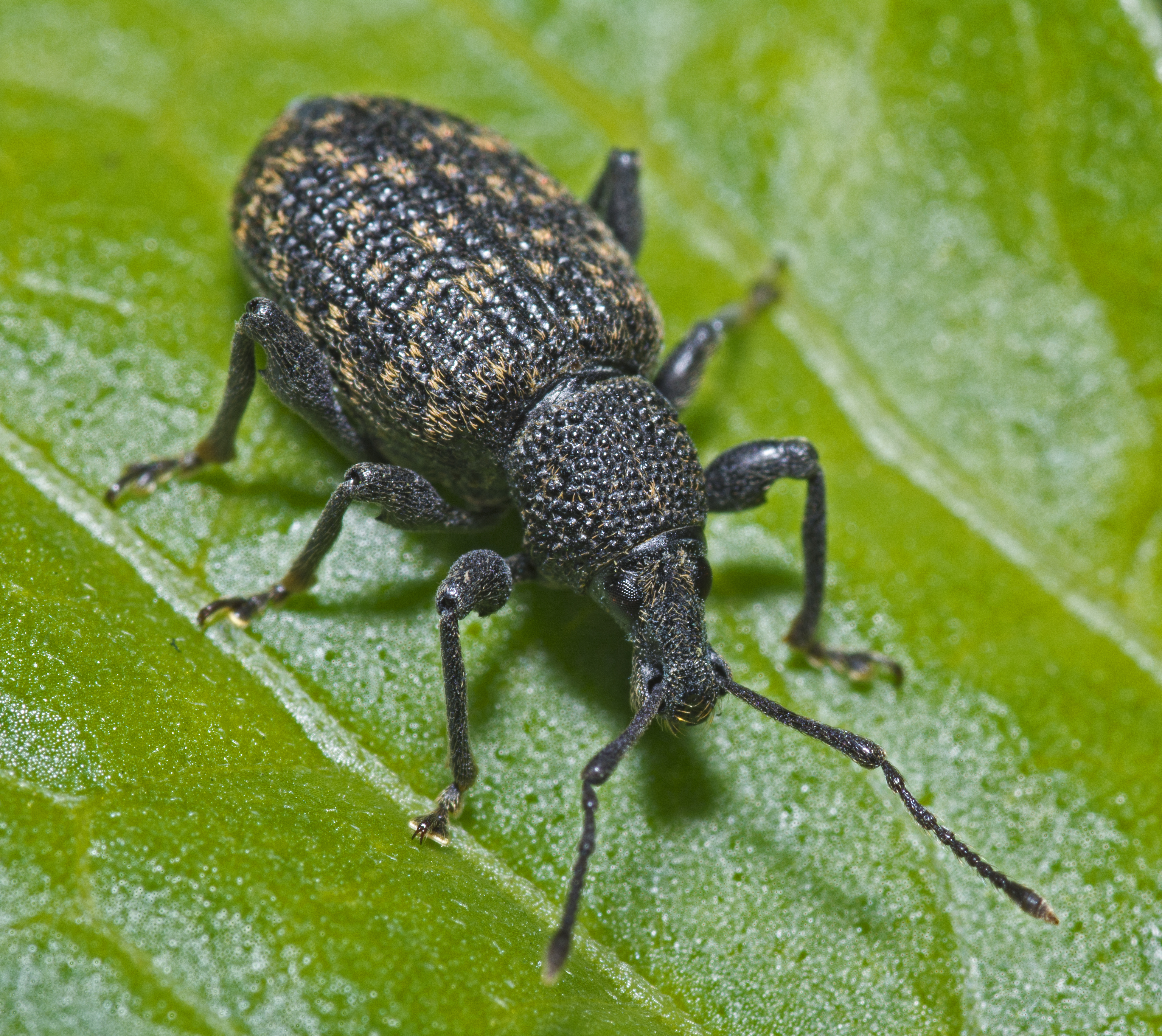
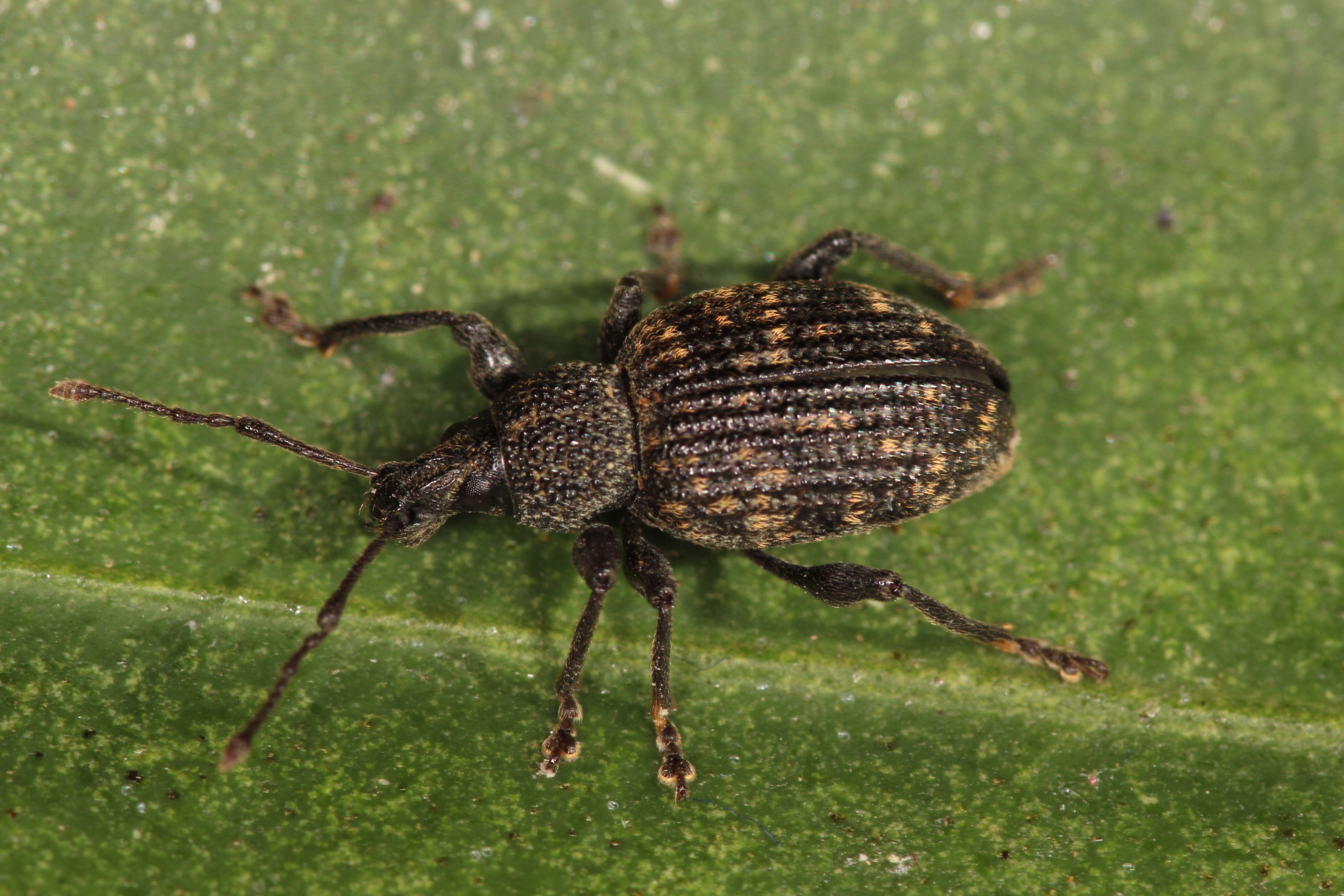
Adult vine weevils are flightless, nocturnal beetles with a distinctive elongated snout (rostrum) and a mottled black appearance. They are most easily recognised by the characteristic U-shaped notches they leave around the edges of leaves. During the day they usually hide beneath pots, benches, leaf litter or other sheltered locations.
Adult vine weevil
Adults are:
- black or dark brown beetles
- approximately 8–10 mm long
- flightless
- mainly nocturnal
- slow moving
Typical adult damage: - notching around leaf edges - scalloped feeding marks - cosmetic leaf damage
Adult feeding is often the first visible warning sign.
Larvae
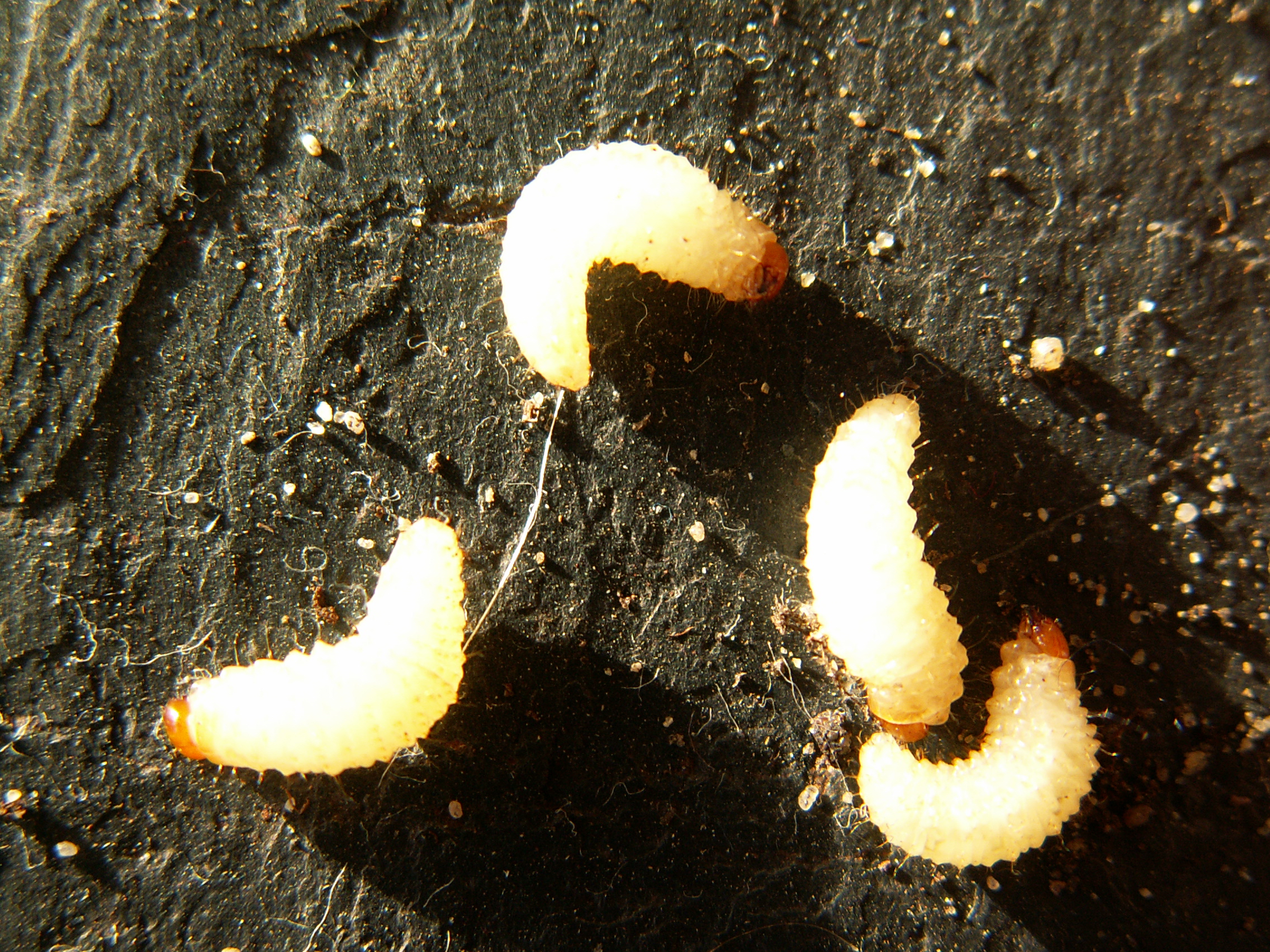
Larvae are:
- creamy white grubs
- legless
- curved “C-shape”
- brown-headed
Usually found: - around roots - in crowns - within substrate - beneath the plant
Larvae are responsible for the most serious damage.
Life cycle
Adult females lay eggs within growing media or substrate.
Typical cycle:
| Stage | Approximate timing |
|---|---|
| Eggs | 1–3 weeks |
| Larvae | Several weeks to months |
| Pupae | 2–4 weeks |
| Adults | Long-lived |
Protected crops may allow overlapping generations.
Larval pressure often increases: - late summer - autumn - mild winter periods in protected systems
Seasonal activity (UK)
Although activity varies with weather and protected cultivation, the following guide shows the typical annual pattern.
| Month | Main activity |
|---|---|
| January | Larvae feeding within roots and crowns |
| February | Larvae continue feeding |
| March | Late larval development |
| April | Pupation begins |
| May | Adult emergence |
| June | Adult feeding and egg laying |
| July | Peak adult activity |
| August | Eggs hatch and young larvae begin feeding |
| September | Peak larval feeding |
| October | Continued root damage |
| November | Larvae remain active during mild weather |
| December | Larvae overwinter within the substrate |
In heated glasshouses and long-season protected crops, overlapping generations may occur and larval activity can continue throughout much of the year.
Damage symptoms
Adult feeding
Adult damage includes: - leaf notching - scalloped edges - cosmetic foliage damage
Adult feeding alone is rarely economically serious.
Most crop losses occur below ground. Plants often begin to wilt only after extensive larval feeding has already destroyed much of the root system.
Larval feeding
Larvae damage: - roots - crowns - root hairs - stem bases
Symptoms may include: - wilting - poor rooting - stunting - collapse - sudden plant death
In strawberries: - weak crowns - poor vigour - collapse during stress periods
Conditions favouring vine weevil
| Condition | Risk effect |
|---|---|
| Container production | Very High |
| Coir/peat substrates | High |
| Long-season crops | High |
| Dense protected systems | Moderate–High |
| Poor substrate inspections | High |
| Carryover trays/pots | High |
| Warm protected conditions | Moderate–High |
Monitoring
Adult monitoring
Inspect: - leaf notching - bench edges - beneath pots - night activity
Adults are most active at night.
Night torch inspections can be highly effective.
Root inspections
Inspect: - weak plants - root zones - crowns - substrate around roots
Look for: - larvae - root feeding - crown damage
High-risk areas
Pay particular attention to: - old stock plants - carryover trays - propagation areas - long-term container crops - sheltered warm zones
Biological control
Vine weevil is usually managed using integrated biological approaches.
Beneficial nematodes
Entomopathogenic nematodes are commonly used against larvae.
Most effective when: - substrate moisture is suitable - temperatures are appropriate - applications are timed correctly - larval populations are not excessive
Preventative applications are usually more effective than rescue treatments.
Environmental management
Useful practices include: - removing old substrate - cleaning trays and pots - reducing carryover plants - monitoring stock plants - avoiding hidden reservoirs
Propagation and nursery risk
Propagation and nursery systems are especially vulnerable because:
- crops remain containerised for long periods
- roots are concentrated
- substrate movement spreads pests
- old trays and pots act as reservoirs
Infestations may spread silently between batches.
Common hotspot areas
High-risk areas include:
- beneath benches
- stock plant areas
- old pots and trays
- propagation tunnels
- sheltered container zones
- carryover crops
Practical IPM strategy
Strong vine weevil programmes usually combine:
- preventative nematodes
- substrate inspections
- hygiene
- stock plant monitoring
- tray/pot sanitation
- removal of weak plants
- prevention of carryover reservoirs
Biological control is usually most successful before heavy larval populations develop.
Common host plants
Vine weevil attacks a wide range of ornamental and fruit crops, particularly those grown in containers or long-term protected production.
Common hosts include:
Selecting one of these plants will show the other important pests commonly associated with that crop.
Often confused with
Root-feeding larvae can sometimes be mistaken for other soil-dwelling pests.
Common comparisons include:
- Chafer grubs
- Leatherjackets
- Cutworms
Adult feeding damage may also be confused with slug feeding or chewing caterpillars. Correct identification is important before choosing a biological control strategy.
Vine Weevil topic guide
Use these focused pages for more detail:
- Identification: adults, larvae and damage
- Host plants and high-risk crops
- Environment, season and production risk
- Biological control solutions
Related BioWiki pages
Key message
Vine weevil problems are usually discovered after larval root damage has already become severe.
The strongest programmes focus on: - prevention - substrate hygiene - early root inspections - preventative biological control - elimination of carryover reservoirs