tags: - public-ready - export-bio - index
Rose Aphid
Common names: Rose Aphid Scientific name: Macrosiphum rosae
Overview
Rose aphids are common sap-feeding aphids associated with roses and ornamental production systems.
They are particularly important in:
- ornamental horticulture
- nursery stock
- garden roses
- protected propagation
- landscape planting
Colonies often establish rapidly on young shoots and flower growth.
Identification
Typical characteristics include:
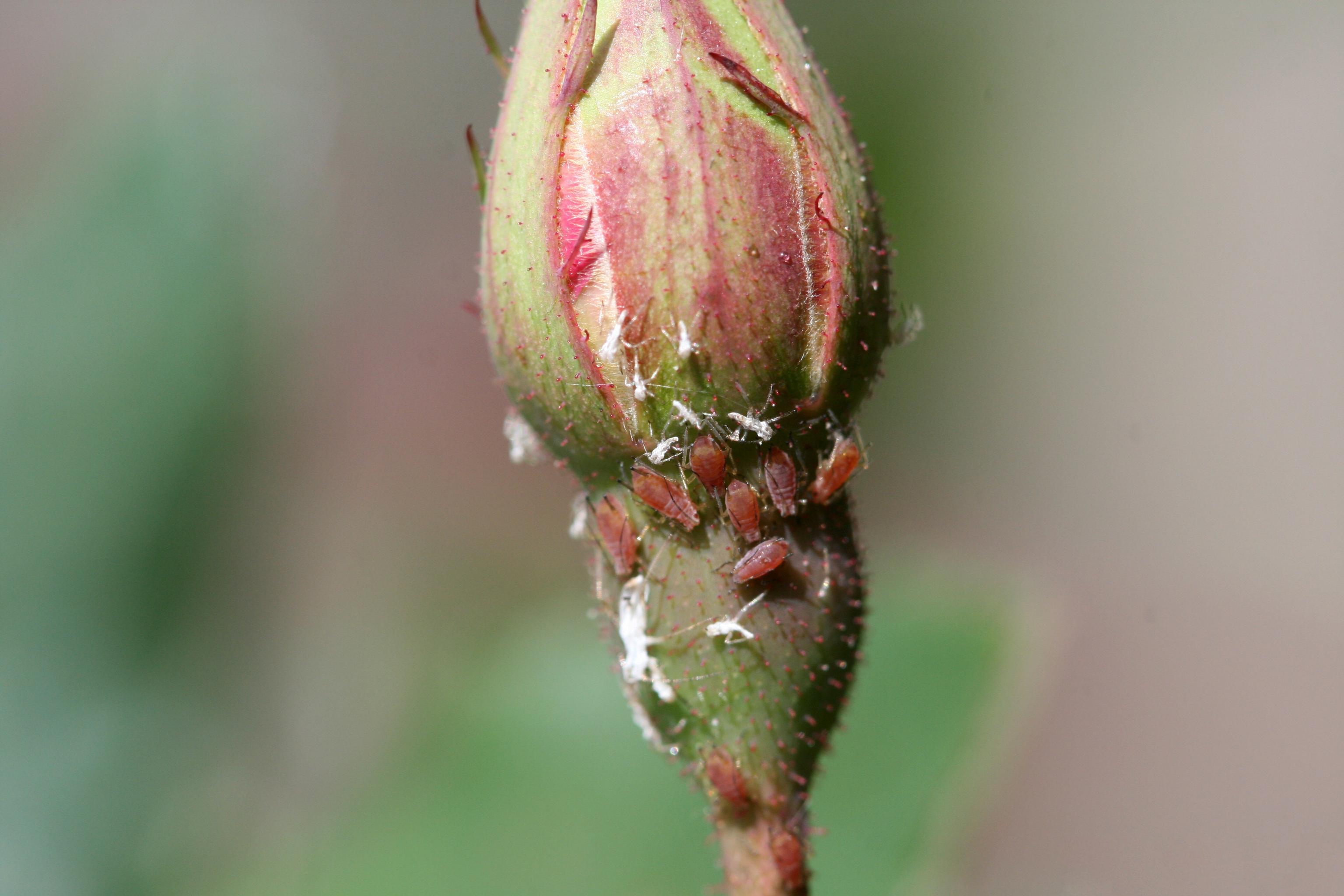
- green, pink or reddish aphids
- clustering around soft shoot tips
- dense colonies on flower stems
- winged and wingless forms
- sticky honeydew deposits
Heavy infestations are often visible around developing buds and soft flushes.
Crop symptoms
Common symptoms include:
- distorted shoots
- curled leaves
- damaged flower buds
- sticky honeydew
- black sooty mould
- reduced ornamental quality
Cosmetic damage is often economically important in ornamental crops.
Environmental drivers
Rose aphid pressure often increases during:
- Spring flush
- warm stable weather
- rapid vegetative growth
- high nitrogen conditions
- dense sheltered canopy growth
Early season soft growth is especially vulnerable.
See: - Temperature - Plant stress
Biological control relevance
Rose aphids are commonly regulated by:
Successful programmes usually depend on:
- early establishment
- hotspot management
- continuity of beneficial activity
- compatible intervention strategy
Outdoor ornamental systems may also benefit from naturally occurring predator populations.
IPM considerations
Integrated Pest Management programmes should focus on:
- early scouting
- soft growth monitoring
- pruning strategy
- balanced nutrition
- preservation of beneficial insects
- minimising disruptive sprays
Repeated broad-spectrum interventions may destabilise natural predator populations and increase rebound risk.
Monitoring strategy
Useful monitoring methods include:
- inspection of shoot tips
- flower bud scouting
- hotspot mapping
- winged aphid observation
- beneficial insect assessment
Monitoring should focus on colony expansion speed and spread between plants.
Ecological relevance
Rose aphid systems often demonstrate classic predator–prey dynamics.
Colonies may initially expand rapidly before:
- parasitoids establish
- lacewing larvae increase
- ladybird activity rises
- natural suppression stabilises populations
Environmental disruption may interrupt these stabilising relationships.
See: - Predator–Pest Ratio Modelling