tags: - public-ready - export-bio - index
Cotton Aphid
Common names: Cotton Aphid / Melon Aphid Scientific name: Aphis gossypii
Overview
Cotton aphid (Aphis gossypii) is a fast-reproducing aphid species commonly associated with protected crops, cucurbits and warm growing environments.
It is particularly important in:
- cucumbers
- melons
- peppers
- ornamentals
- strawberries
- nursery systems
Population growth can become explosive under warm protected conditions.
Identification
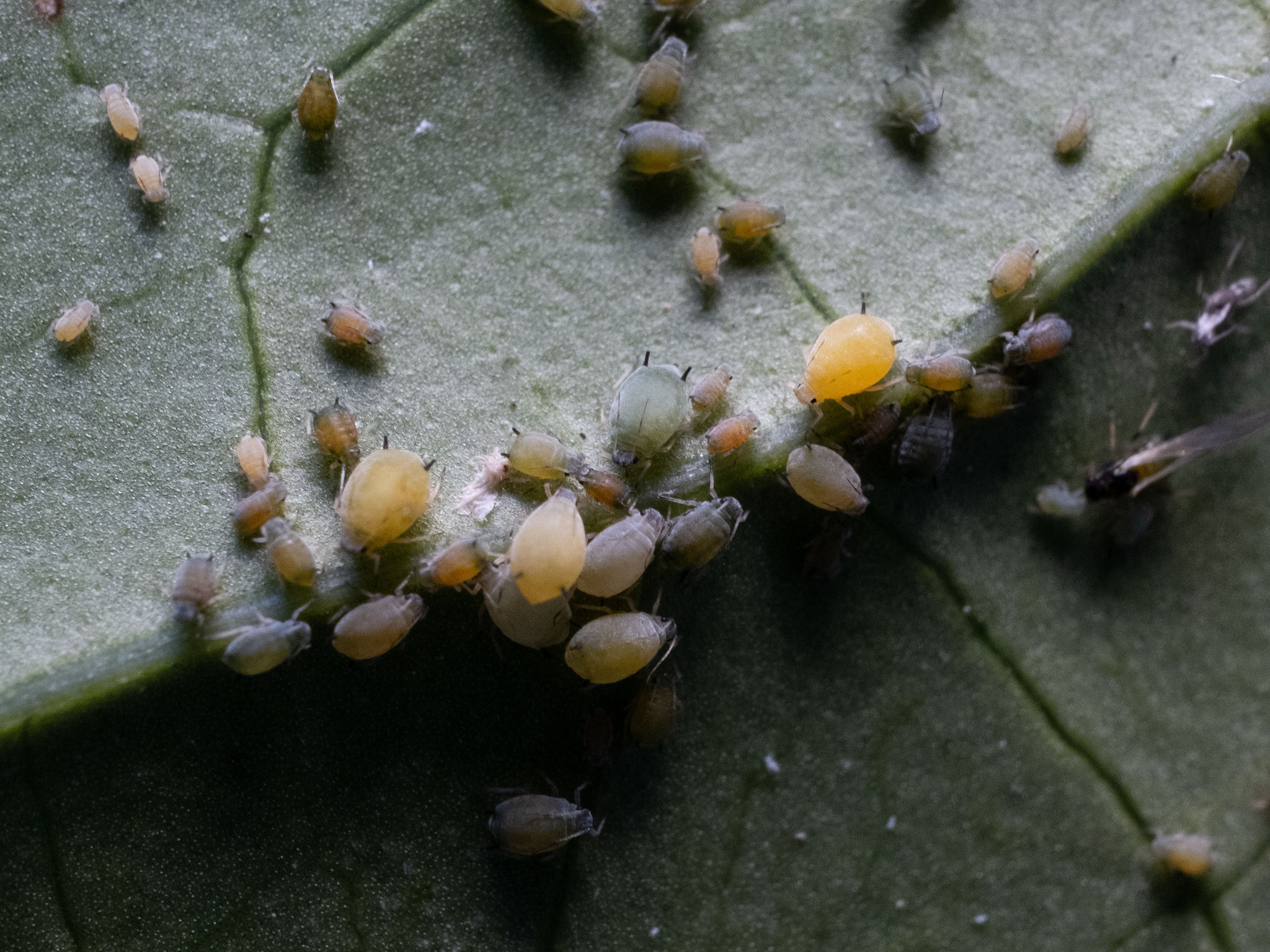
Cotton aphids are small, highly variable in colour and may appear pale green, yellow, dark green or almost black depending on the host plant and environmental conditions. Dense colonies often develop on young shoots and the undersides of leaves, where they produce large amounts of honeydew that encourages sooty mould growth.
Typical characteristics include:
- small aphid size
- variable colour forms
- green, yellow, dark green or almost black colonies
- dense clustering around soft growth
Mixed colour forms may occur within the same crop.
Crop symptoms
Common symptoms include:
- distorted soft growth
- leaf curling
- sticky honeydew
- black sooty mould
- contamination of flowers and fruit
- reduced vigour
Heavy pressure can rapidly affect crop quality and marketability.
Environmental drivers
Cotton aphid strongly favours:
- warm temperatures
- stable protected environments
- soft vegetative growth
- high nitrogen growth
- low airflow areas
Protected crops can support continuous population cycling.
See: - Temperature - Spring flush - Ventilation and air movement
Biological control relevance
Cotton aphid is commonly managed using:
Biological control performance often depends on:
- early introductions
- hotspot treatment
- crop accessibility
- environmental stability
- compatible spray strategy
IPM considerations
Integrated Pest Management programmes should focus on:
- early detection
- regular scouting
- winged aphid monitoring
- environmental consistency
- avoiding excessive vegetative growth
- preserving beneficial populations
Cotton aphid populations can rebound quickly after disruptive spray programmes if predator and parasitoid systems collapse.
Population behaviour
Colonies may establish rapidly in local hotspots before spreading through the crop.
Key risk factors include:
- warm stable weather
- dense canopy growth
- excessive nitrogen
- predator lag
- stressed crops
Interpretation should focus on trend direction and spread rather than isolated counts alone.
See: - Predator–Pest Ratio Modelling