tags: - public-ready - export-bio - index
Green Peach Aphid
Common names: Green Peach Aphid / Peach-Potato Aphid Scientific name: Myzus persicae
Overview
Green peach aphid (Myzus persicae) is one of the most economically important aphid species in commercial horticulture.
It has:
- a very broad host range
- rapid reproductive potential
- strong virus transmission importance
- high adaptability
- major relevance in protected crops and outdoor production
Common host crops
Green peach aphid may affect:
- peppers
- aubergines
- cucumbers
- lettuce
- brassicas
- ornamentals
- soft fruit
- nursery crops
- herbs
Host switching can occur across crop groups and weeds.
Identification
Typical features:
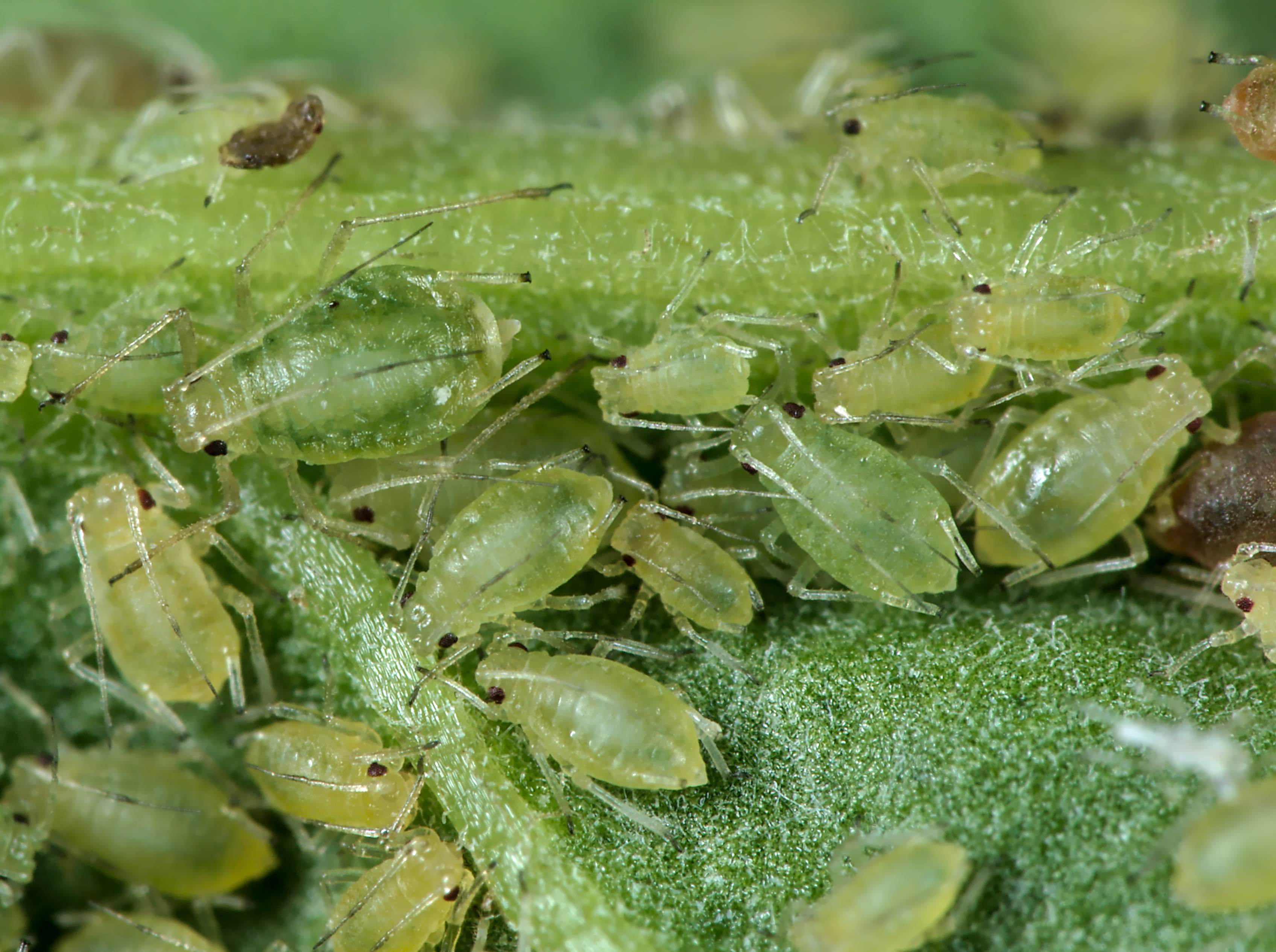
- pale green to yellow-green body
- pear-shaped aphid form
- winged and wingless stages
- colonies often cluster around soft growth
Colour can vary depending on crop, stress and environmental conditions.
Crop symptoms
Typical symptoms include:
- distorted soft growth
- curled leaves
- sticky honeydew
- black sooty mould development
- reduced vigour
- contamination of marketable crop
Heavy infestations may rapidly suppress young plant growth.
Virus transmission risk
Green peach aphid is particularly important because of its role as a vector of plant viruses.
Virus transmission risk may become economically important even at relatively low aphid populations.
This makes:
- early monitoring
- winged aphid detection
- exclusion strategy
- rapid intervention
especially important.
Environmental drivers
Pressure often increases during:
- Spring flush
- warm stable weather
- soft nitrogen-rich growth
- protected crop conditions
Rapid vegetative growth can accelerate colony establishment.
See also: - Plant stress - Temperature
Biological control relevance
Green peach aphid is commonly targeted using:
Programme success depends heavily on:
- early establishment
- hotspot detection
- environmental stability
- compatible spray strategy
IPM considerations
Effective IPM programmes typically combine:
- regular scouting
- environmental management
- soft growth control
- compatible biological control
- weed management
- winged aphid monitoring
Outbreaks often accelerate when crops become highly vegetative and predator pressure lags behind colony expansion.