Scale Insects
Overview
Scale insects are sap-feeding pests that attach themselves to stems, leaves and woody tissue.
They are especially important in: - citrus - ornamentals - protected woody crops - conservatory systems
Scale insects are difficult because they: - remain hidden - build slowly - produce honeydew - encourage sooty mould
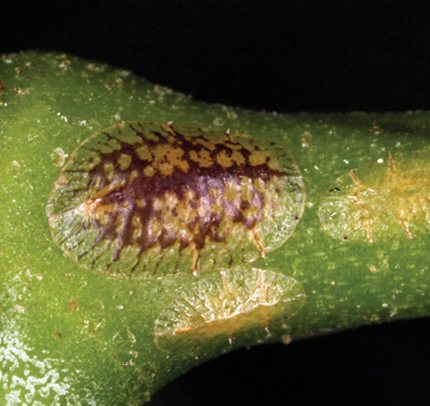
Identification
Scale insects may appear as:
- brown discs
- waxy bumps
- shell-like coverings
- immobile patches on stems
Heavy infestations may produce: - sticky honeydew - black sooty mould
Damage symptoms
Typical symptoms include:
- yellowing leaves
- sticky foliage
- reduced vigour
- branch decline
- poor plant quality
- mould growth
Conditions favouring scale insects
| Condition | Risk |
|---|---|
| Warm protected crops | Very High |
| Dense woody canopy | High |
| Long-season crops | High |
| Poor airflow | Moderate |
| Carryover stock plants | High |
Monitoring
Inspect: - stems - woody growth - leaf undersides - branch junctions - sheltered canopy areas
Scale insects are often concentrated in hidden sheltered areas.
Biological and IPM strategy
Useful approaches include:
- early hotspot detection
- pruning infested material
- improving airflow
- preserving beneficial insects
- reducing hidden reservoirs
- inspecting incoming stock carefully
Commonly affected crops
Related BioWiki pages
Key message
Scale insects often become severe before they are noticed because infestations establish deep inside sheltered canopy areas.