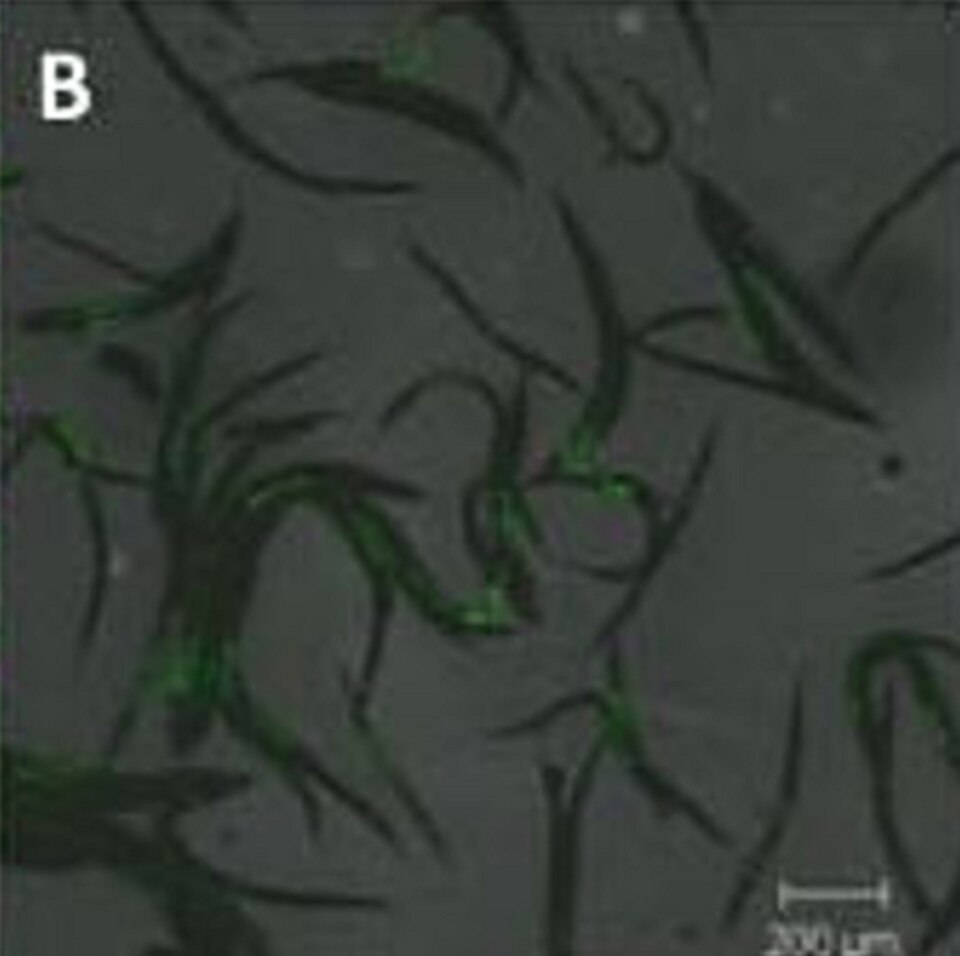
Heterorhabditis bacteriophora
Overview
Entomopathogenic nematode used for soil-dwelling insect larvae. Particularly effective against vine weevil larvae in warm substrates.
Target pests
- Vine weevil larvae (Otiorhynchus spp.)
- Other susceptible soil larvae (context dependent)
Mode of action
Infective juveniles enter the host and release symbiotic bacteria that rapidly kill the insect. Nematodes reproduce inside the cadaver and release new infective juveniles.
Best conditions
- Performs best in warmer substrate temperatures
- Substrate must be evenly moist before and after application
- Avoid UV exposure and drying
Strengths
- Active searching behaviour
- Strong performance against vine weevil larvae in suitable conditions
Limitations
- Sensitive to drying
- Reduced activity in cold substrates
- Requires correct irrigation practice
Linked pest pages
IPM positioning
Warm-condition nematode for vine weevil larvae; curative soil treatment.
Best deployment strategy
- Use for vine weevil larvae in warmer substrates.
- Apply as a thorough drench and maintain uniform moisture afterwards.
- Often used as a planned programme in known-risk periods rather than one-off treatments.
Compatibility notes
- Works well with: Atheta Coriaria as supportive soil predation; combine with monitoring and timing.
- Avoid: dry substrate conditions post-application; moisture continuity is critical.
Environmental preferences
- Best suited to warmer substrate temperatures.
- Moisture is critical: evenly moist substrate before and after application.
- Avoid drying and UV exposure during/after application.