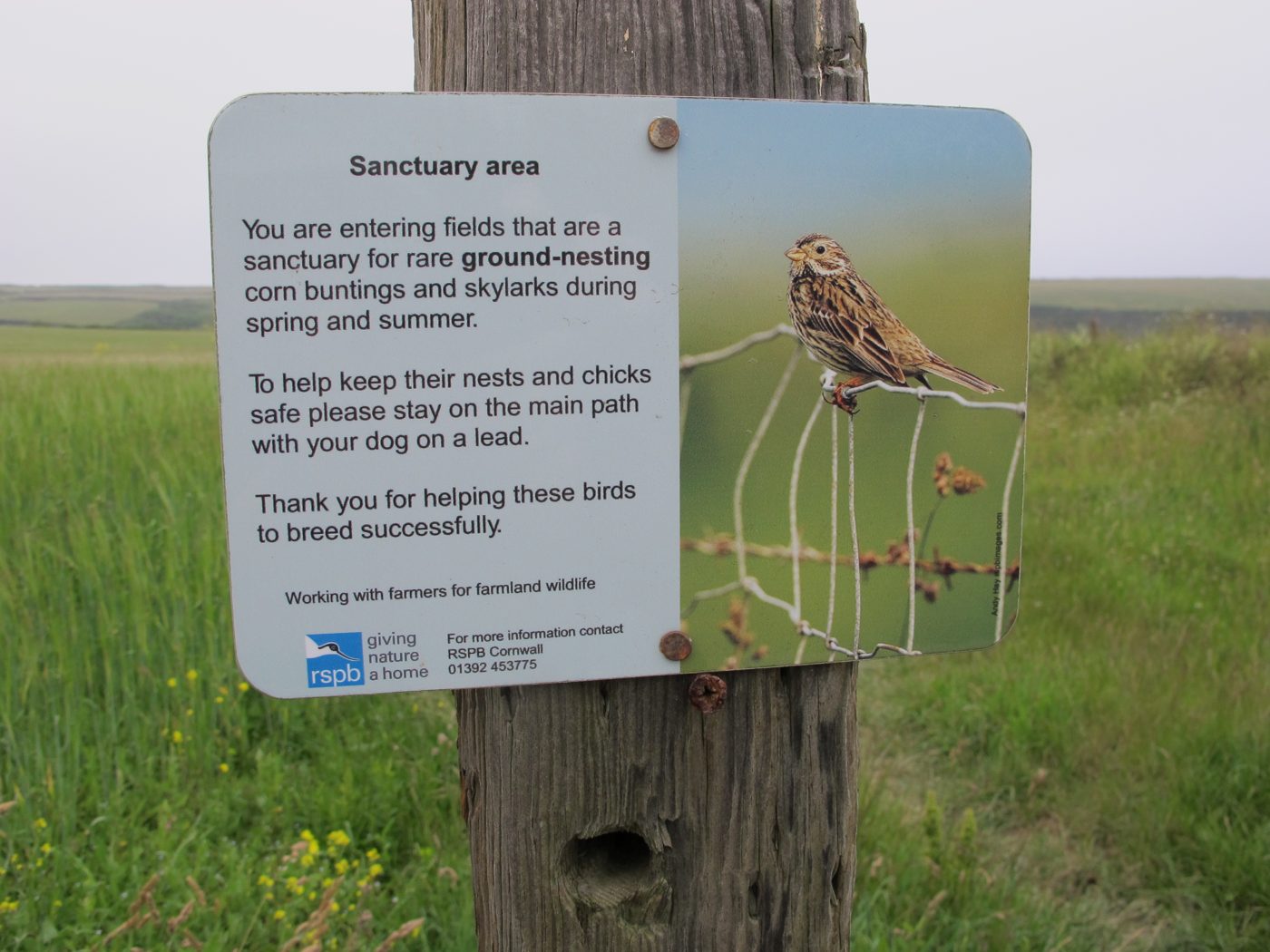
When we think about helping farmland birds, we often think about hedgerows, trees and nest boxes. Those things matter, but some birds need something quite different. Their nesting habitat is the field itself.
Skylarks are a good example. That bird singing somewhere above the crop may have its nest hidden on the ground below. They use cereal fields, grassland and other open habitats, and their dramatic decline has placed them on the UK Red List of conservation concern. (rspb.org.uk)
I think this creates a practical question for farming. How do we give those birds enough time and space to raise their young while still managing a productive crop?
It would be too simple to put the whole problem down to combines getting bigger or harvesting getting faster. Those operations can threaten active nests, but the changes begin much earlier in the season.
The shift towards autumn-sown cereals has been important for skylarks. As crops grow taller and denser, suitable nesting space becomes harder to find. A field that worked for an early nest may no longer work for another attempt later in the spring or summer. The loss of overwinter stubbles also reduces feeding opportunities. (bto.org)
Grassland presents another difficulty. A silage field can attract nesting birds, only to be cut before their young can escape. Repeated cuts can leave too little time for successful breeding between operations. Skylarks need opportunities for more than one brood, so providing somewhere suitable for a few weeks is not necessarily enough. (rspb.org.uk)
And it is not only skylarks.
Corn buntings nest in cereal fields, silage fields and grassy margins. They often begin late, with flightless young still present in August, putting them directly in the path of harvesting and cutting. Yellow wagtails also nest on the ground in crops, including cereals, potatoes, peas and field beans. Lapwings use open farmland too, although their nests may be more exposed to spring cultivation, rolling and other early operations. These birds share a landscape, but they do not all need the same management. (rspb.org.uk, web-cdn.rspb.org.uk, rspb.org.uk)
One useful measure for skylarks is surprisingly small: leave patches undrilled within a winter cereal field.
These are called skylark plots. A typical recommendation is two plots per hectare, each around 16 square metres, such as four metres by four metres. Together, that is only about 0.32% of the field area. (farmwildlife.info)
The name can be slightly misleading. Skylarks generally use the open patches for feeding and access, with nests in the surrounding crop. The plots help keep a dense cereal field usable later in the breeding season. They are not simply little nest sites, and they are different from leaving standing crop unharvested. (cfeonline.org.uk)
Location matters. They belong within the open field, away from boundaries and tramlines, where predator access can be greater. Turning off the drill briefly during sowing is a practical way to establish them. Planning the gaps before the crop is planted is preferable to trying to create them once birds are already nesting. (gov.uk, bto.org)
This is also why a lovely flowering margin beside a tall hedge does not answer every bird’s needs. Skylarks need open, in-field habitat. We should keep the margins, but recognise that habitat around the edge and habitat within the crop do different jobs. (rspb.org.uk)
What about identifying nests and leaving an area around them?
Where a nest is known to be active, protecting it from machinery is a sensible part of the plan. But I would not encourage people to walk systematically through standing crops looking for nests. They are difficult to find, and searching can cause disturbance or damage.
My practical approach would be to watch adult activity from a distance, record suspected locations privately and get help from a farm conservation adviser or experienced bird surveyor. Make sure everyone carrying out field operations, including contractors, knows where work needs to be avoided. Do not move the nest or assume that a tiny tuft left around it will provide adequate protection.
The area retained and the timing of subsequent work need to account for the species, surrounding cover and any young birds nearby. A chick leaving the nest does not necessarily mean it can fly safely away from a mower.
There is a legal responsibility here as well. In England, wild birds, their eggs and active nests are protected. Intentionally damaging or destroying a nest while it is being built or used is an offence. A known nest needs to be considered before work proceeds. (gov.uk)
Leaving larger areas uncut or unharvested can have a role, but we need to be clear about their purpose. Standing cereal left through winter can provide valuable seed food, particularly for birds such as corn buntings. That is useful, but winter feeding habitat does not automatically solve the shortage of safe summer nesting habitat. (rspb.org.uk)
In grassland, cutting dates and intervals can make a real difference. For skylarks, RSPB guidance identifies avoiding cutting or grazing between early April and the end of May, followed by intervals of at least seven weeks between cuts, as a way to allow successful nesting. That will not fit every silage system, and it is not a guarantee that every nest is safe. But it gives us something concrete to discuss when deciding which fields could be managed differently. (rspb.org.uk)
A less productive field might suit later-cut hay management. Elsewhere, carefully selected uncut areas can provide refuge for young birds. On wet grassland with breeding waders, retaining cover around wet features and adjusting mowing dates may be particularly useful. The plan needs to follow the birds actually present. (rspb.org.uk)
Food matters alongside nesting cover. Young birds need insects, and a field can look suitable while providing very little to eat. Flowering margins, beetle banks and a considered approach to pesticide use can contribute to that food supply. This overlaps with good integrated pest management: conserving insects has benefits beyond the crop alone. (rspb.org.uk)
For me, the starting point is understanding what is happening on the holding. Which birds are there? Which fields do they use? What operation is most likely to interrupt breeding, and what small change could avoid it?
Sometimes the answer might be a few undrilled patches. Sometimes it might be a later cut, a protected nesting area or a different crop in the rotation.
We still need to produce food. But where a relatively small adjustment can give birds a realistic chance of raising their young, I think that deserves a place in the crop-management plan.