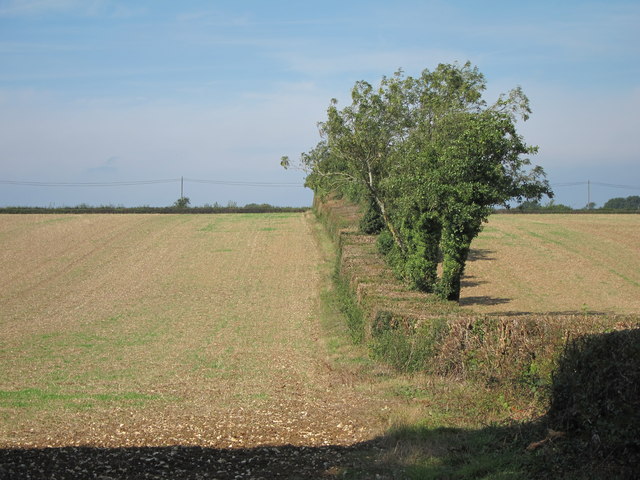
I think hedgerows are one of those things we become so used to seeing that we stop properly looking at them. They mark the edge of a field, follow a lane, keep the livestock in. Then, at some point in the year, someone comes along and cuts them back.
But there is a lot going on in that strip of countryside. There is history, habitat, shelter and food. From a crop-management perspective, there is also somewhere for beneficial insects to live between the times we need them.
So how much should we be cutting? And are we sometimes doing it simply because we like things to look tidy?
Hedgerows have different origins. Some developed from woodland left along the edges of cleared land. Others grew along existing boundaries, or were deliberately planted to divide fields and contain livestock. Many were planted during the enclosure period, particularly between the late 1700s and early 1800s, although some boundaries are much older. A hedge can be part of the working history of a place, surviving through generations of changes in farming. (historicengland.org.uk)
There is an interesting way of exploring that history by counting the different woody species growing in it. Hooper’s rule broadly suggests that each woody species in a roughly 30-metre stretch represents about a century of age. You count different trees and shrubs, rather than individual plants.
But I would treat this as a clue, rather than a date. A recently planted mixed hedge could contain six species from the start. An old hedge may remain dominated by one species. Location, soil and previous management all affect the result. Old maps and estate records are much better evidence where they exist. Species richness tells us something interesting about a hedge, but it does not give it a reliable birthday. (conservationhandbooks.com)
The wildlife value is easier to appreciate when you think about the whole hedge. Flowers supply pollen and nectar. Fruit and seeds provide food later in the year. Dense branches offer nesting cover, while the base, leaf litter and surrounding vegetation provide shelter and overwintering habitat. Connected hedges also give animals a way to move through the landscape without crossing large areas of open ground. (historicengland.org.uk)
For me, that makes hedgerows relevant to practical biological control too. Beneficial insects need habitat outside the crop, and hedges can contribute to that. It does not mean a hedge will solve every pest problem, but it is part of the wider system supporting a working farm. (rspb.org.uk)
There is a brief legal point worth making here. The following rules refer to England; requirements differ elsewhere in the UK. For agricultural hedgerows covered by the management regulations, routine cutting and trimming is prohibited from 1 March to 31 August inclusive. There are specific exemptions, including some safety work, but those have conditions. Being outside those dates does not remove the separate protection for active bird nests: intentionally damaging or destroying a nest while it is being built or used is an offence. (gov.uk, gov.uk)
Removing a countryside hedge is another matter. The Hedgerows Regulations 1997 establish a notification process for qualifying hedges, with additional protection for those classed as important because of their history or wildlife value. Being on your own land does not automatically mean you can remove it. Before taking out a field boundary, or part of one, check with the local planning authority. (gov.uk)
Then there is the practical question of whether we should cut at all.
Often, yes. A hedge is a managed habitat, and suitable trimming can encourage branching and help maintain a dense structure. But repeatedly cutting an established hedge hard back to the same small outline is very different from managing it for long-term health.
Leaving every hedge indefinitely is not necessarily the answer either. Some eventually become lines of trees with thin, open bases. Those trees still have value, but the continuous low shelter of the hedge can be lost. Laying or coppicing may eventually be needed to renew growth from the base. The condition of the hedge should guide that decision. (gwct.org.uk, ptes.org)
For many established field hedges, cutting every two or three years is a useful starting point. Cutting a half or a third of the farm’s hedges each year, spread around the holding, leaves other sections flowering and fruiting. Annual cutting can remove the older growth on which many shrubs produce their flowers and berries. (gwct.org.uk)
Where access and ground conditions allow, January or February is often better than cutting as soon as September arrives. It leaves berries available through more of the winter. Newly planted or recently rejuvenated hedges may need more frequent formative trimming to build a dense framework, so the same routine will not suit every hedge. (ptes.org)
As for height and width, I would resist prescribing one measurement for every field. As a practical starting point, I would generally favour an established field hedge around two metres high or more, and roughly 1.5–2 metres wide, where the site allows. Those are management suggestions, not legal dimensions. The important thing is a substantial hedge with good cover near the ground, rather than a tall hedge with nothing underneath it. (hedgelink.org.uk)
Variation matters as well. Some birds, including yellowhammers, favour shorter hedges, while other wildlife benefits from taller growth and hedgerow trees. A farm with a mixture of structures can offer more than one where every boundary is cut to an identical height. (rspb.org.uk, historicengland.org.uk)
I would also let the cutting line move out gradually, leaving a little more height and width on successive cuts. That avoids continually cutting into the same old wood. Retain suitable young stems to become future hedgerow trees, alongside existing mature ones. We need to think about what replaces them eventually. (ptes.org)
The margin deserves just as much thought as the woody hedge.
In England, where the agricultural buffer rules apply, reasonable steps must be taken to maintain green cover within two metres of the hedge’s centre, with no cultivation, fertiliser or pesticide application there unless a specified exemption applies. That measurement is important: it is not two metres beyond the outer branches. A wide hedge may occupy much of the protected strip. (gov.uk)
For habitat, I would look beyond that minimum. Where practical, my starting suggestion would be an uncultivated grassy or flower-rich margin of around two metres beyond the hedge’s outer edge on each field side, with wider sections where space allows. That is a habitat aim, rather than a universal requirement. A mixture of rough, tussocky cover near the hedge and more actively managed vegetation further out can provide different kinds of shelter and feeding opportunities. (rspb.org.uk)
Road verges deserve a mention because much the same thinking applies. They can be valuable flowering habitat, yet we often manage them as if the whole strip needs to resemble a lawn.
Visibility at junctions, bends and crossings must come first. But keeping those areas safe does not necessarily require repeatedly mowing the entire verge. Away from safety-critical sections, Plantlife recommends an annual cut between August and September where only one cut is possible, allowing flowers time to set seed. Some verges benefit from a second cut, depending on their growth and species. (plantlife.org.uk)
Removing the cuttings matters too. Leaving them in place can smother smaller plants and return nutrients to the soil, favouring vigorous grasses. Cutting and collecting helps maintain the conditions many wildflowers need. Never cutting is not automatically better: open, flower-rich verges also need management to stop them becoming dominated by coarse growth and scrub. (plantlife.org.uk, plantlife.org.uk)
What I would like to see is more thought behind the routine. Look at the hedge before deciding how to cut it. Look at what is flowering in the verge before deciding when to mow it.
A slightly less tidy boundary can be doing a great deal of useful work. We should give it enough room, and enough time, to do it.